Published · Updated · By Luxur Automotive
Few carmakers have shaped the modern car as much as Mercedes-Benz. It has built cars for popes and for the famous, but its real story is engineering.
Where it began
The story starts with Gottlieb Daimler. His company, Daimler-Motoren-Gesellschaft (DMG), built small internal combustion engines for use on land, at sea and in the air. It sat at the center of the new motor industry.
Emil Jellinek ordered a new kind of car from DMG, built to his own requirements and designed to be much safer than the horseless carriages of the day. It was named after his daughter, Mercedes. The Mercedes 35 hp was introduced in 1900 and went straight to racing, where it set records at Nice, in France. It set the company on its course: safety and innovation.
Daimler and Benz
In 1926, DMG merged with the company of Karl Benz, widely credited with the first gasoline-powered automobile. Cars from the new company carried a new name: Mercedes-Benz.
Safety as a habit
Racing drove much of the company's progress, and what it learned went into its road cars. Mercedes-Benz was instrumental in bringing anti-lock brakes (ABS) and airbags to passenger cars. It also let other carmakers license its safety technology, so features it developed now protect drivers of every make.
What it means for your car
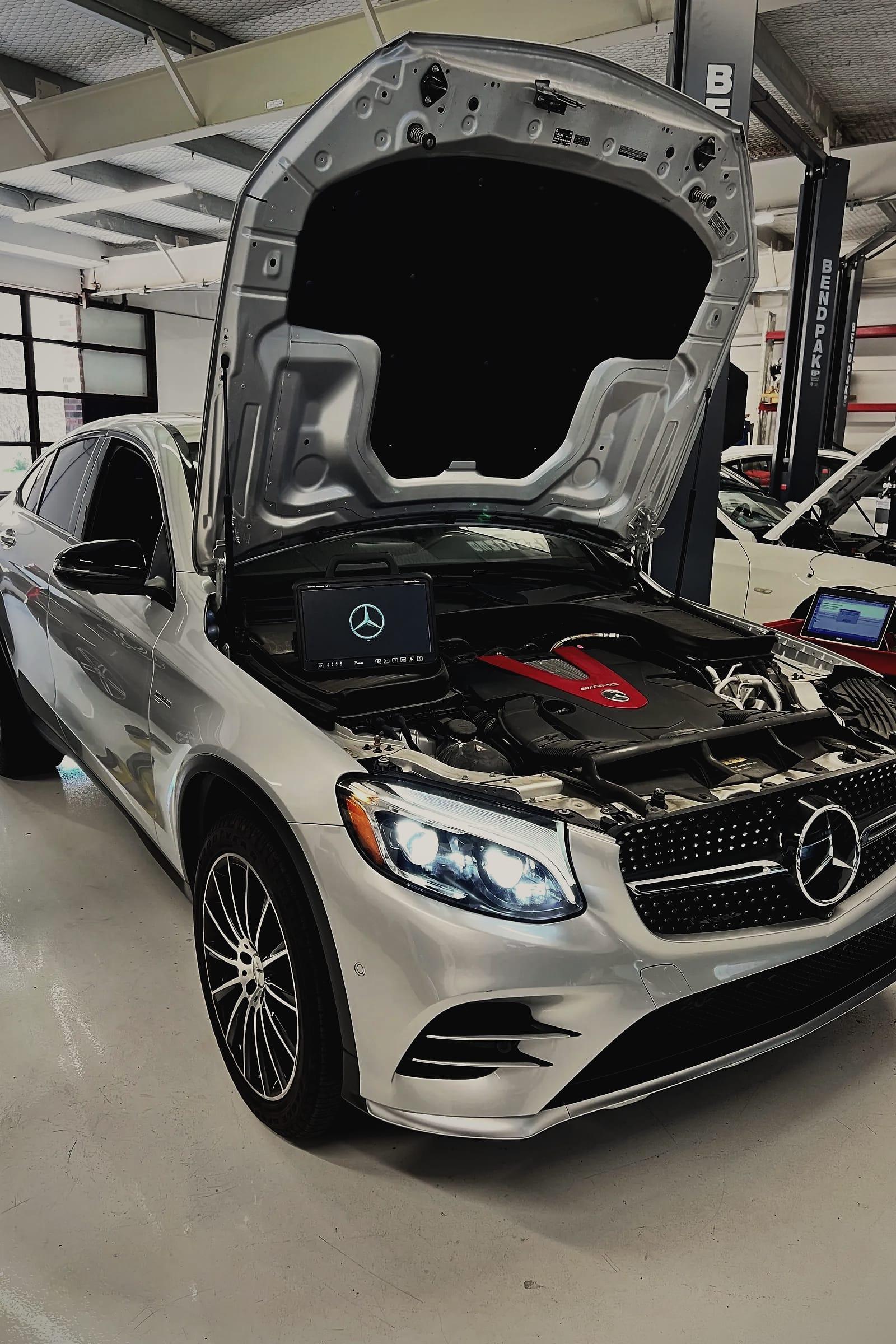
A modern Mercedes carries that engineering into every system. Looking after one well takes specialized equipment and technicians who understand the brand. We have invested in factory-supplied diagnostic software, equipment and tools, and we use OEM and premium aftermarket parts and fluids.
Read our guide to Mercedes Service A and B, or see our Mercedes-Benz service.